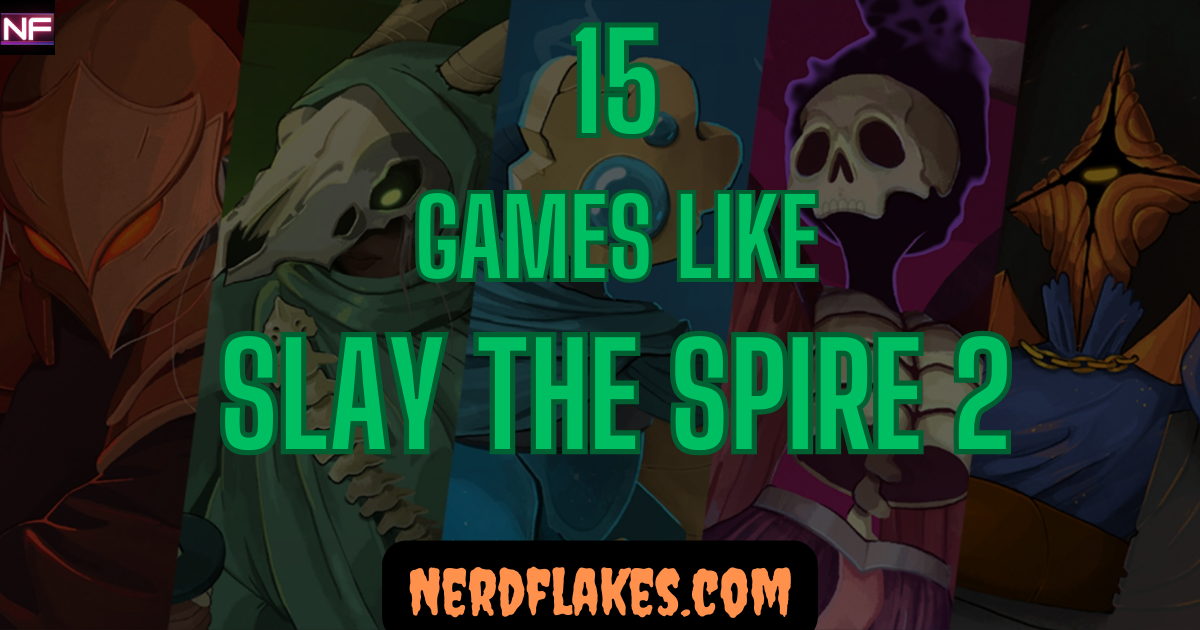
When Slay the Spire 2 was announced, it immediately caught attention because of what made the original so addictive. It wasn’t just a card game. It was about strategy, risk, and building powerful combinations over time. Every run felt different, every decision mattered, and success depended on how well you adapted your deck to unpredictable encounters. That mix of roguelike progression, deckbuilding, and tactical combat made it one of the most influential indie games in its genre.
Since then, many players have been asking the same question: what do we play next?
This list answers that. Below are 15 games like Slay the Spire 2 that focus on deckbuilding, roguelike runs, strategic decision-making, and replayability. Some lean into pure card mechanics, some add board or RPG systems, and others experiment with new twists—but all of them deliver that same “one more run” feeling.
Quick Comparison: Top 5 Picks
| Game | Core Similarity | Best For |
|---|---|---|
| Monster Train | Deckbuilding + roguelike runs | Strategy players |
| Roguebook | Card-based progression | Story + deckbuilding |
| Griftlands | Cards + narrative choices | Story-driven players |
| Across the Obelisk | Co-op deckbuilding | Multiplayer players |
| Inscryption | Card mechanics + twists | Players wanting something different |
1. Monster Train
Why it’s similar
Monster Train builds on Slay the Spire’s formula with deckbuilding, relic systems, and roguelike progression. Each run requires adapting your deck to survive increasingly difficult encounters.
What makes it unique
It introduces multi-layered combat where you defend different floors simultaneously, adding strategic depth.
Key features:
Deckbuilding progression
Roguelike runs
Multi-lane combat
Price: $24.99 | Platforms: PC, PS4, Xbox One, Switch
2. Roguebook
Why it’s similar
Roguebook focuses on building decks during runs, collecting cards, and improving strategies—similar to Slay the Spire’s core loop.
What makes it unique
It adds map exploration where you reveal the world using resources, making navigation part of the strategy.
Key features:
Deckbuilding system
Map exploration
Character pairing
Price: $24.99 | Platforms: PC, PS4, Xbox One, Switch
3. Griftlands
Why it’s similar
Griftlands uses deckbuilding for both combat and negotiation, requiring strategic planning similar to Slay the Spire.
What makes it unique
It blends story choices with card mechanics, letting decisions affect future encounters.
Key features:
Dual deck systems
Narrative choices
Roguelike progression
Price: $19.99 | Platforms: PC, PS4, Xbox One, Switch
4. Across the Obelisk
Why it’s similar
Across the Obelisk features deckbuilding, relics, and branching paths, much like Slay the Spire.
What makes it unique
It supports co-op play, allowing multiple players to build decks together.
Key features:
Multiplayer co-op
Deck synergy
Roguelike progression
Price: $24.99 | Platforms: PC
5. Inscryption
Why it’s similar
Inscryption includes card-based combat and roguelike elements, requiring strategic deck decisions.
What makes it unique
It mixes genres and storytelling in unexpected ways, constantly changing gameplay.
Key features:
Card gameplay
Story twists
Unique mechanics
Price: $19.99 | Platforms: PC, PS4, PS5, Switch
6. Dicey Dungeons
Why it’s similar
Dicey Dungeons replaces cards with dice but keeps the same run-based strategy and build variety.
What makes it unique
The dice system introduces randomness and new strategic layers.
Key features:
Dice-based combat
Roguelike runs
Character variety
Price: $14.99 | Platforms: PC, PS4, Xbox One, Switch
7. Vault of the Void
Why it’s similar
Vault of the Void focuses on deep deck control and strategic planning similar to Slay the Spire.
What makes it unique
It removes randomness in draws, giving players more control over outcomes.
Key features:
Strategic deck control
No RNG draws
High difficulty
Price: $19.99 | Platforms: PC
8. Tainted Grail: Conquest
Why it’s similar
Tainted Grail blends deckbuilding with roguelike exploration and progression systems.
What makes it unique
Its dark fantasy world and story elements add atmosphere to each run.
Key features:
Deckbuilding
Dark setting
Progression systems
Price: $29.99 | Platforms: PC
9. Gordian Quest
Why it’s similar
Gordian Quest combines deckbuilding with RPG systems and party progression.
What makes it unique
It adds character leveling and story campaigns beyond single runs.
Key features:
RPG progression
Deckbuilding combat
Party system
Price: $19.99 | Platforms: PC, Switch
10. Banners of Ruin
Why it’s similar
Banners of Ruin focuses on deckbuilding and turn-based strategy across multiple characters.
What makes it unique
You manage a party of characters, each with their own deck.
Key features:
Party decks
Strategic combat
Roguelike progression
Price: $19.99 | Platforms: PC, PS4, Xbox One, Switch
11. Wildfrost
Why it’s similar
Wildfrost offers deckbuilding, relics, and run-based progression similar to Slay the Spire.
What makes it unique
Its turn timer system adds a unique twist to combat pacing.
Key features:
Turn timer mechanics
Deckbuilding
Roguelike runs
Price: $19.99 | Platforms: PC, Switch
12. Pirates Outlaws
Why it’s similar
Pirates Outlaws follows the same deckbuilding and progression loop as Slay the Spire.
What makes it unique
Its simplified systems make it more accessible while still offering depth.
Key features:
Simple deckbuilding
Roguelike structure
Multiple characters
Price: $14.99 | Platforms: PC, Mobile
13. Nowhere Prophet
Why it’s similar
Nowhere Prophet combines deckbuilding with roguelike decision-making.
What makes it unique
It includes army management, where units act as cards.
Key features:
Deck + army system
Resource management
Roguelike runs
Price: $24.99 | Platforms: PC, Switch
14. Loop Hero
Why it’s similar
Loop Hero shares roguelike progression and strategic decision-making.
What makes it unique
Instead of cards in combat, you place cards to shape the world.
Key features:
World-building cards
Roguelike loop
Strategy systems
Price: $14.99 | Platforms: PC, Switch, Xbox
15. Darkest Dungeon
Why it’s similar
Darkest Dungeon emphasizes strategy, progression, and risk management similar to Slay the Spire.
What makes it unique
Its stress system and party management add psychological depth.
Key features:
Turn-based combat
Stress mechanics
Party management
Price: $24.99 | Platforms: PC, PS4, Xbox One, Switch
Conclusion: What to Play First
If you loved Slay the Spire 2, start with Monster Train, Roguebook, or Griftlands. Those three best capture the deckbuilding depth, replayability, and progression systems. Players who want something unique should try Inscryption, while co-op fans will enjoy Across the Obelisk.
No matter which you choose, every game on this list delivers strategic gameplay and strong replay value. If you have a favorite that belongs here, drop it in the comments.
Read More Like This!
 15 Games Like Balatro You Need to Play in 2026
 15 Games Like Inscryption You Need to Play in 2026
 15 Games Like Cult of the Lamb You Need to Play in 2026
 15 Games Like Hades You Need to Play in 2026
 15 Games Like Hollow Knight: Silksong You Need to Play in 2026
 15 Games Like Hi-Fi Rush You Need to Play in 2026
 15 Games Like Palworld You Need to Play in 2026
 15 Games Like Stardew Valley You Need to Play in 2026
 15 Games Like Borderlands 4 You Need to Play in 2026
 15 Games Like Helldivers 2 You Need to Play in 2026
 15 Games Like Animal Crossing You Need to Play in 2026
 15 Games Like Sifu You Need to Play in 2026
 15 Games Like Sea of Stars You Need to Play in 2026
 15 Games Like Deep Rock Galactic You Need to Play in 2026
 15 Games Like Persona 5 Royal You Need to Play in 2026